The New Australian Social Contract: Navigating Rights, Risks, and the Green Economy 2026
Welcome to late 2026, where the Australian corporate landscape is virtually unrecognizable from just a few short years ago. We aren’t just talking about minor, incremental tweaks to the Fair Work Act or a subtle shift in Friday office culture. We are witnessing a complete, ground-up rewrite of the Australian social contract between employers and their employees, paving the way for a robust green economy 2026.
From landmark “Right to WFH” legislation hitting Victoria to the impending reality of the “PayDay Super” overhaul this July, the rules of engagement have changed permanently. If you are a business owner, an HR professional, or simply an ambitious employee trying to navigate this new terrain, paying attention isn’t optional anymore—it is the absolute baseline for survival.
In this deep dive, we are unpacking the final 2026 roadmap for the Australian professional in the context of the green economy 2026. We’ll explore how states like Victoria and New South Wales are tackling the remote work and AI surveillance debates head-on, why small business cash flow is about to get a massive wake-up call, and where the real job growth is hiding as artificial intelligence continues to automate routine tasks.
Grab a coffee. The pace of change this autumn is relentless.
The Legislated “Right to Work from Home”: Victoria Leads the Charge
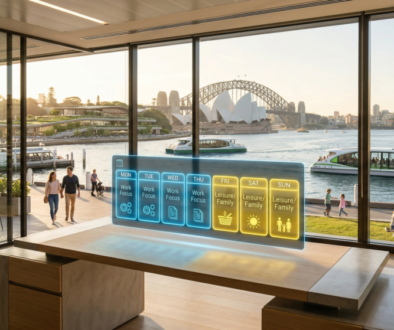
Let’s start with the legislative bombshell that dropped on March 3, 2026. The Victorian government announced groundbreaking legislation designed to legally enshrine an employee’s Right to Work from Home for a minimum of two days per week. Set to take full effect this September, this move has sent absolute shockwaves through boardroom tables across the country.
For years, the remote work debate has been an endless, exhausting tug-of-war disguised as discussions about “company culture” and “collaboration.” But Victoria has just grabbed a workplace perk and transformed it into a tightly regulated governance issue.
The core of this legislation hinges on what legal experts are calling the “Reasonable Test.” The days of an employer refusing a remote work request simply because upper management prefers a full, buzzing office are officially over. The burden of proof has entirely shifted. Employers must now tangibly, legally prove that in-person attendance is a strict, functional requirement of the specific role in question.
If a dispute arises today, it is no longer just an internal HR squabble—it escalates to formal regulatory channels. Because of this, human resources departments are currently scrambling to build rigid, documented governance frameworks around flexible work requests to ensure consistency and bulletproof compliance. It is a massive win for worker autonomy, but an undeniable administrative hurdle for legacy management styles.
The NSW Digital Work Systems Bill: AI Under the Microscope
While Victoria is currently tackling where we work, New South Wales has decided to tackle how we are managed while we do it. Following closely behind, the NSW Parliament passed the highly debated Digital Work Systems Bill on February 12, 2026. Make no mistake: this isn’t just a minor tech policy update. It is Australia’s first major AI workplace safety law, and it sets a massive national precedent.
The bill addresses the darker, less-discussed side of the remote work revolution: digital surveillance and algorithmic management. Employers operating in NSW are now legally required to conduct rigorous “Psychosocial Risk Assessments” on any artificial intelligence or digital monitoring software used to track remote or hybrid workers.
If a piece of software dictates shift allocation, actively tracks keystrokes, or uses hidden metrics to assess performance, it is now classified as a potential psychosocial hazard under workplace health and safety laws.
Furthermore, this legislation grants union officials unprecedented new powers to inspect the digital systems and algorithms that employers use, ensuring they aren’t creating unsafe, hyper-pressurized workloads or discriminatory outcomes. It’s a deeply polarizing move. Worker advocates are celebrating it as a vital shield against exploitative algorithmic management. Conversely, business councils are sounding the alarm, arguing it creates a massive compliance headache and exposes highly sensitive commercial data. Regardless of where you stand on the political spectrum, the reality is clear: if your company uses tech to manage people in NSW, your digital footprint is now a legal liability.
The “PayDay Super” Revolution: A Seismic Shift in Cash Flow

If the WFH and digital safety laws are fundamentally changing workplace culture, the “PayDay Super” revolution is changing the cold, hard math. Mark your calendars for July 1, 2026. The traditional “quarterly super” model is officially dead and buried.
The federal government’s new legislation mandates that employers must pay superannuation entitlements at the exact same time as regular wages. If you pay your staff weekly, you now pay super weekly. If you pay fortnightly, super goes out fortnightly.
For small to medium business owners, this March is the critical window to upgrade your payroll infrastructure. The cash flow crunch heading our way is very real. For decades, many businesses essentially utilized that three-month superannuation buffer as working capital to smooth over tight financial spots. That buffer vanishes entirely on July 1. Beyond the immediate cash flow impact, the high-frequency transparency of PayDay Super means that errors or missed payments are now visible in real-time to both the employee and the Australian Taxation Office (ATO). Relying on an old-school, clunky payroll system in 2026 is practically begging for non-compliance penalties.
But let’s flip the coin for a second, because for the Australian worker, this is arguably the biggest legislative win of the decade. Your retirement savings will no longer sit idly in your employer’s bank account for months on end. Those funds are entering the market and earning compound interest weeks, if not months, earlier. For the Gen Z and Millennial workforce, who have decades of compounding ahead of them, this structural shift could seamlessly generate tens of thousands of extra dollars by the time they hit retirement. It is a massive, quiet step forward in closing the wealth gap.
The Hiring Crisis of Autumn 2026: Green Energy and Human Care
The Rise of the Green Economy 2026
While the regulatory landscape shifts beneath our feet, the actual job market is undergoing its own massive structural pivot. We all know the prevailing headlines: AI is aggressively automating routine data entry, basic copywriting, and entry-level administrative tasks. But looking past the standard AI anxiety, two specific sectors are experiencing a full-blown “Hiring Crisis” this autumn.
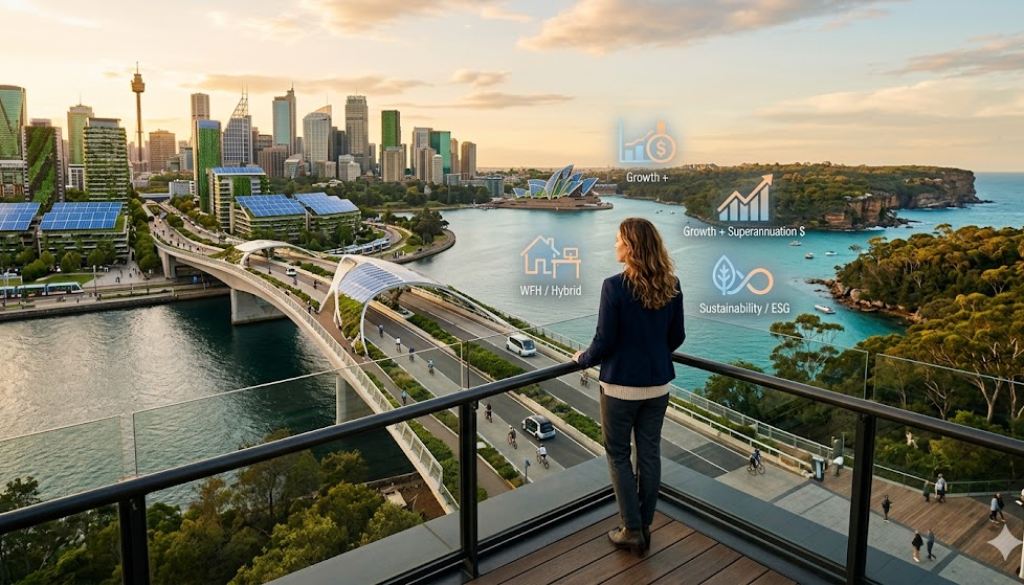
First, the Green Economy 2026 is absolutely exploding. As Australia aggressively scrambles to meet its ambitious 2030 climate targets, sustainability is no longer a PR buzzword or a fringe department; it is a core operational requirement. Specialists in Solar Grid Integration, renewable energy infrastructure, and corporate ESG (Environmental, Social, and Governance) Reporting are in unprecedented demand. We are seeing starting salaries in these niches jump by 8% just this quarter alone. Businesses are desperate for professionals who can navigate complex environmental compliance and build genuinely sustainable systems that hold up to regulatory scrutiny.
Second, the Human-Centric Care sector remains the ultimate “AI-Proof” bastion. You can program a machine to analyze an X-ray with staggering accuracy, but you cannot program it to hold a patient’s hand or navigate the complex, nuanced emotional landscape of specialized education. Aged care, mental health support, and complex nursing are starved for talent.
Interestingly, the most lucrative sweet spot right now is the hybrid role: Health Informatics Professionals. These are the rare, highly sought-after individuals who can fluently bridge the gap between advanced AI diagnostic outputs and empathetic, human-to-human patient care.
The 2026 Career Mantra: Why Resilience Beats Stability
So, what does it take to survive and thrive in this highly regulated, tech-driven, and rapidly shifting economy? The ultimate insider takeaway for 2026 is a harsh but necessary truth: the traditional 30-year, single-trajectory career is completely dead. The new career mantra across Australia is “Resilience Over Stability.”
According to recent workforce data, roughly 1 in 16 Australian workers will need to transition into a completely new occupation by the end of the decade. The ability to pivot is no longer just a useful soft skill; it is a hard economic necessity.
The clear winners in this autumn’s job market are those who possess a unique, highly adaptable skill mix: high “Digital Fluency” combined with deep “Emotional Intelligence.” We have crossed the technological threshold where machines can write, code, and analyze data faster than we ever could. But they cannot lead a divided team, they cannot negotiate a complex cultural shift within a stubborn company, and they certainly cannot empathize with a frustrated client. The future belongs to the professionals who let the AI handle the heavy execution while they double down on the distinctly human elements of strategy, leadership, and authentic connection.
Conclusion: The 2026 Horizon
We have traveled through the “Chewy” textures of Mubarakiya, the “Thermal Envelopes” of Geelong, and the “Digital Wallets” of Dubai. The world of 2026 is unquestionably faster, undeniably smarter, and vastly more automated. But ironically, as our tools become more robotic, our legislation and our high-value skills are becoming more focused on human well-being, psychological safety, and environmental sovereignty than ever before.
Whether you are a “Solo-Sustler” in Nairobi, a Tech Lead in Dubai, or a property investor navigating the new compliance laws in Sydney, the 2026 playbook is ultimately simple: Stay Analogue in your heart, but Digital in your execution.